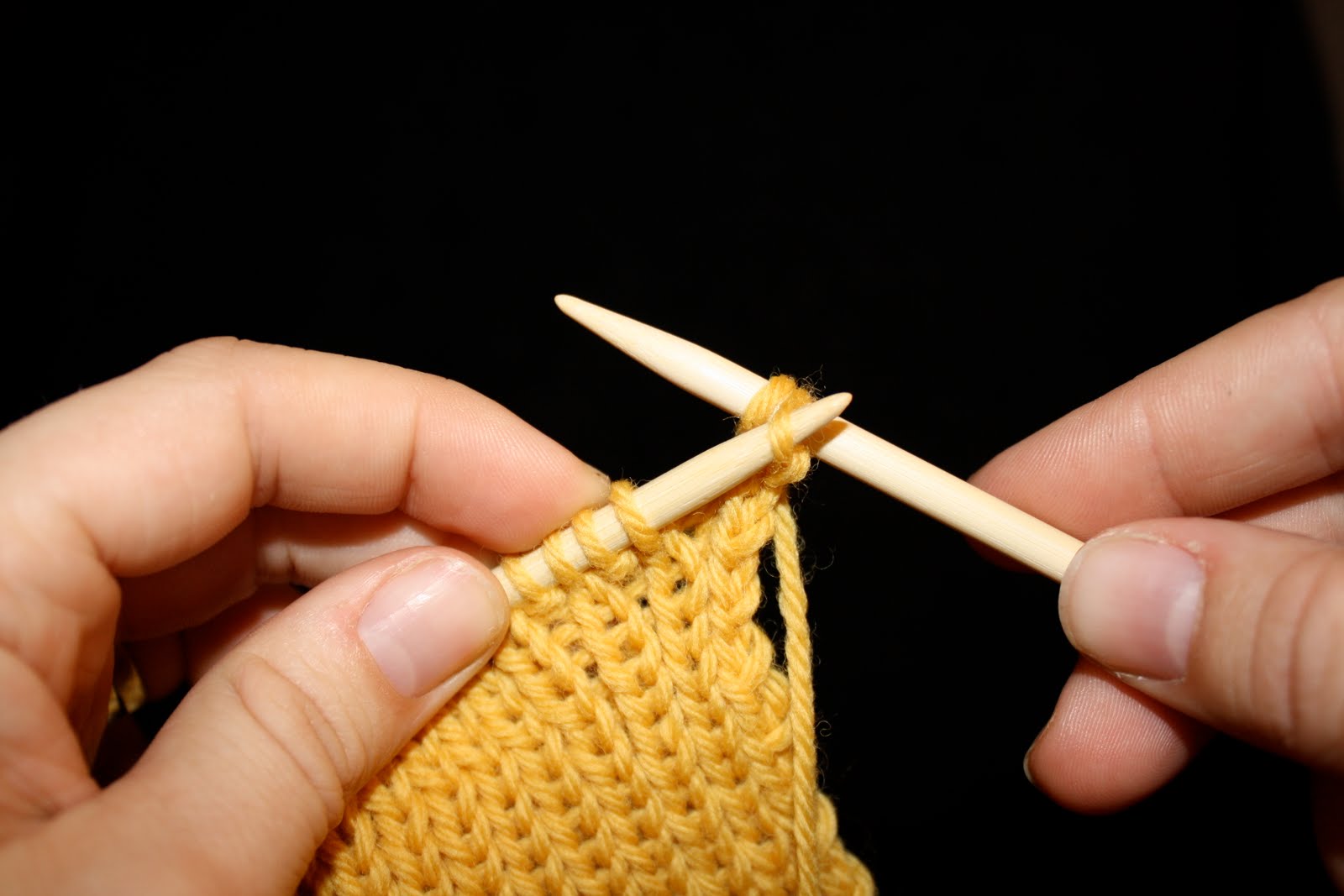
Thursday, April 8, 2010

Move out blues

When you're in college, or just your first few years away from the home where you grew up, it seems that you move around relatively often. Leases end, new jobs begin, perhaps romance blossoms, and you end up like a pinball being bounced around by...by some kind of...pinball wizard, or something (hey, someone should make a song about that!). My copilot and I have continued this nomadic lifestyle a bit beyond your average time span. Since I don't plan on ever growing up, this isn't terribly surprising, but I despise the move out process. I'm not even just talking about packing and the move itself (which also totally suck, don't get me wrong), I hate the general funk that hovers (perhaps figuratively and literally) over the homestead in the weeks leading up to the move.

I've been renting a room from a very nice, laid back couple during my stay here at Berkeley. We'll call them M and D (no, I'm not living at home with my Mom and Dad). M has a propensity for doing her dishes immediately after using them, D doesn't really see the point in that. They've struck on a compromise where D has a tub that he puts his dishes in when he doesn't feel like cleaning them, and can come back and do them later. For the first couple of months, I was also diligent about cleaning my dishes right after I was finished with them. As time went by, I steadily lost motivation for dish doing, and M subtly put out another tub. I've come to think of it as the Tub of Shame. After that, I did my best to keep the ToS empty, but the move-out funk has rolled in. I noticed while eating breakfast this morning that a small pyramid had formed. So much dish related shame. I've completely lost motivation for bettering my living conditions. Here's a small taste, just the desk:

Oh hey, there's that sock I still haven't finished in the lower right corner there. Mmm I see some Joe-Joe's too (Trader Joe's equivalent to Oreos, which I may or may not have been eating in bed last night).


If a well-bred Victorian lady came into my room, she would put her handkerchief to her forehead and faint, mortified at the mess (a well-bred Victorian man would drop his monocle into his drink, of course). I started knitting what I've come to think of as the Infinite Cabled Hat last night in an effort to snap out of it:

I *heart* cables.


It's a hat(sort of. It's hat-ish)!


I think it helped a bit. I love me some Cascade 220 yarn, especially the Heathers line. So reasonably priced! Such pretty colors! My LYS back home has a whole wall dedicated to the 220. I heard that they recently changed owners, and the 220 wall better not be on the chopping block (I'm looking at you, Lakeside Fibers--do not make me drive into Fitchburg for my fix!)!

Wednesday, April 7, 2010

Picot cast-on

I haven't abandoned the stretchiness experiment; I'm starting to get into cast-ons & bind-offs that I haven't tried before. Today I want to chat about the picot cast-on. I've historically avoided picot in general, believing it to be too twee for my taste. When I hear 'picot', I think of a baby bonnet or a doily or something else equally cutesy. My knitting is not 'cutesy'. My knitting is bad-ass, hardcore, and cutesy--wait! Scratch that last one. Let me start over.

There isn't a lot of good information about the picot cast-on floating around the internet, so this is a how-to that I really wanted to write. The basic concept of picot is adding extra stitches for decorative purposes, making a 'bobble'. There are many variations depending on how large you want the decorative part to be. What I describe here is the least obvious picot cast-on, though it will ruffle a bit. I learned how to do it from The Knitters Book of Finishing Techniques.

Picot cast-on

Start with your trusty slip-knot:

This is your first stitch.


Cast-two more stitches using the cable cast-on.

Now you have a total of three stitches on the left-hand needle. (I don't know why my right-hand needle is in there-finishing up the last cast-on, I guess?)


Knit two stitches.

One stitch left on LH needle, two on RH needle


Bind-off one stitch, like the conventional knit bind-off; slip the first stitch on the over the second stitch on the RH needle using your LH needle, then drop it off of the LH needle:


Place the stitch remaining on your RH needle onto your LH needle by inserting your LH needle through the underside of the stitch:


This is your first picot cast-on stitch. To continue, cast-on one stitch with the cable cast on. Make sure your LH needle is going between the stitches for the cable cast-on, rather than through any loops. Then repeat the procedure starting back at "Knit two stitches." until you have cast-on the amount needed for your piece. It'll look something like this:


And the finished product, on k1p1 ribbing, looks like this:


I was pleasantly surprised! I really like it, and I think it's very conducive to allowing the ribbing to stretch. I'm declaring picot a front-runner for a cast-on with stretch, and am glad to have overcome my prejudices against it.

Tuesday, April 6, 2010

Sock inspiration!

It's working it's magic already! I was relaxing on the porcelain fixture last night (the best place for reading, natch) and flipping through Folk Socks. Wouldn't you know it, I've already picked out another pair that I want to knit for the copilot:


Don't those look cozy? Now I have to remember this feeling when I've finished one and the thought of starting the other is as daunting as crossing the Gobi. I started to feel like Edward Norton in Fight Club, when he's ordering from the IKEA catalog on the john:

"I flipped through catalogs and wondered: What kind of dining set defines me as a person?"


An aside: if you Google "Edward Norton toilet screenshot", the first thing that comes up is a scathing review for The Hulk. I guess I'll take that one of the ol' Netflix queue.

At this point, I stopped reading Folk Socks and bookmarked it for the next porcelain excursion. But I was even inspired to finish a sock:

Oh no! My sock has a hole in it! And sticks coming out of it!


K, so maybe I almost finished it. I'm still proud.

Monday, April 5, 2010

Xmas in April

I'm still knitting a Christmas gift. We're talking about Christmas '09, in case there was any doubt. I should be more ashamed of that than I am (which is virtually not at all). My mistake was thinking that I could knit two pairs of socks in two weeks. Let me rephrase that: My mistake was thinking that I wanted to knit two pairs of socks in two weeks. Socks and I have an odd relationship. No, not that Socks, perv. Knitted socks. I'm not sure how to describe it without sounding like a total douche, but I'm going to try anyway. For whatever reason, making socks is en vogue right now (as en vogue as knitting can get, I know I'm a nerd) and I can't quite get into it. I love the finished project, and it was originally something I was intimidated to try ("Turning the heel is soooo hard!"- bull). Once you've learned the basics of sock construction, you know how to make a sock.

Bam! It's a sock. (This picture makes it look more complicated than I intended. I swear, it's not.)


I definitely don't think of myself as a hipster, or someone who bucks popular trends just to feel superior (that was redundant, I could have just said hipster). I just don't get the appeal. I equate it to the fixed gear ("fixie") of the cycling world--another trend de jour I can't get behind. I know that there are different little tweaks you can do (different toes, different heels) and you can do them top-down or toe-up, but half-way through one sock I'm ready to start something new. So I do, then I come back to the socks, work a little, get bored, start something new, then repeat--until six months later I have a pair of socks.

I could possibly be re-inspired by a used-bookstore find from this weekend: Folk Socks, by Nancy Bush. Check it:


It has history of socks, evolution of socks through different cultures, what regions the different constructions came from, etc. I eat that kind of stuff up, so I'm hoping this will kindle a little sock love in my cold heart (and help me finally get this Xmas present done).

Friday, April 2, 2010

Knit bind-off

Since I got my complaining out of the way, how about some knitting stuff? I'm trying to keep some more of the 'technical posts' how do you say, cleaner? I'm an engineer, I work with mostly dudes all day, and hey, I heard (on Wait Wait! Don't Tell Me no less, so you know it's true) that cursing helps you bond with your co-workers. That being said, my mom reads this site, so, sorry Mom, I'm trying to behave.

For two of the swatches I've made so far, the knitted cast-on and the cable cast-on, the complementary bind-off is the knit bind-off. This is according to The Knitters Book of Finishing Techniques , which is a great collection of techniques including the most common cast-ons and bind-offs and their various advantages and drawbacks. I'd like to officially give it the "AC Engineered Knits Bump", and guarantee that you'll love it (guarantee void everywhere). First things first, let's go over the knit bind-off.

Knit bind-off

Knit two stitches:


Using the tip of your left-hand needle, hook the first stitch on your right hand needle (the one that you knit first):


Pass the first stitch over the second stitch:

Up n' over.


And drop it off the needle. One stitch bound-off!

Booyah!


Knit another stitch so there are two on the right hand needle again. Repeat the procedure until all stitches are bound off. It'll look something like this with ribbing:


I used a needle three sizes larger than the working needle. It's easy to do this bind-off too tightly, so I usually use a larger needle.

But how well does this really match up to the knitted cast-on and cable cast-on? Browsing through the other photos, I would say very well to the cable cast-on, bit of a stretch to the knitted cast-on. The knitted cast-on is usually fairly subtle (especially when you don't do it with a gigantor needle) and I don't think the knit bind-off is particularly subtle. This may just be it's 'best' match, not necessarily a 'good' match. I'm going to keep my eye out for a better one.

April 13, 2010 - Edited to add: For a technique to clean up that last remaining stitch, see the sequel, Knit bind-off: last stitch boogaloo.

Full disclosure

I have a shameful secret. Here it goes: I like the TV show Ghost Whisperer. I know. I know. I like the idyllic little town it's set in, the over-the top plots, the crazy, ultra-feminine, and rarely climate appropriate clothes that Jennifer Love Hewitt wears, and I might just envision myself owning a knitting shop akin to JLH's antique shop. Alright, and the guy who plays her husband might be a little cute. Here's pretty tame example of the outfit thing:

Because who doesn't wear their negligee gown when talking to a group of children? Keep in mind the kids are probably all in winter coats.


It's a total guilty pleasure, what can I say? But why do I feel the need to talk about my secret shame? Jennifer Love Hewitt decided it would be a good idea to write a book. An advice book. About dating. Oh, JLH. This is the woman who has run through half of the single men in Hollywood (including such winners and Carson Daly, John Mayer and most recently Jamie Kennedy *shudder*) and also had some very awkward, public breakups.

But, perhaps she's gained a lot of wisdom through those escapades, you say. I downloaded a sample to my Kindle (it's free, don't worry) and, well, to say that she's a terrible writer is being kind. I get the intent - it's written in a "hey girlfriend, let's chat LOL" sort of relaxed style - but it's not endearing nor particularly funny. It was disjointed, like she had never really gotten past the brainstorming phase and used every idea she scribbled on a bar napkin with no cohesive point to bring them all together. There are a LOT of superfluous exclamation points. Where the hell was her editor? And the title, oh the title: The Day I Shot Cupid: Hello, My Name Is Jennifer Love Hewitt, And I'm A Love-aholic (so, yes, her name is on the cover twice) But what really bothered me was the desperate vibe of "WE NEED MEN TO BE COMPLETE and I might have to hide who I am to do it, but that's OK, and you should do it too". Consider this excerpt: "This is embarrassing and personal, but once a month, since I was twelve years old, I go to my favorite jewelry store and try on my dream ring." It just makes me feel sad. I don't know if we share the same priorities (that's the royal 'we', in the sense of JHL vs. the majority of sentient females) Here's some more helpful tips:

*“Remember: Cleavage isn’t cheap, it’s gorgeous! Show it off!”

*“Before a date, vagazzle ‘it’! (Not for him, for you!)”

*“Take a bath every night with a tiara on. It really does make you feel like a queen!

OK, and the vagazzling thing creeps me out, too. I'm not going to explain it, you can watch the video. Christ, JLH. Even NPR is making fun of you. Why are you ruining my Ghost Whisperer experience??

Thursday, April 1, 2010

Cable cast-on

Adding to my stretchiness swatch collection, last night I used the cable cast-on. I've used this one a few times, and was(and still am, though slightly less so) skeptical about it's ability to stretch. This is a very firm cast-on, but I think also a very neat one. What's that? You'd like to see how it's done? I thought you'd never ask.

Cable cast-on:


Step 1: Cut a hole in the box. Wait, oops, those are instructions for something else.

Step 1: Cast-on two stitches using the knitted cast-on

This will be your left-hand (LH) needle.


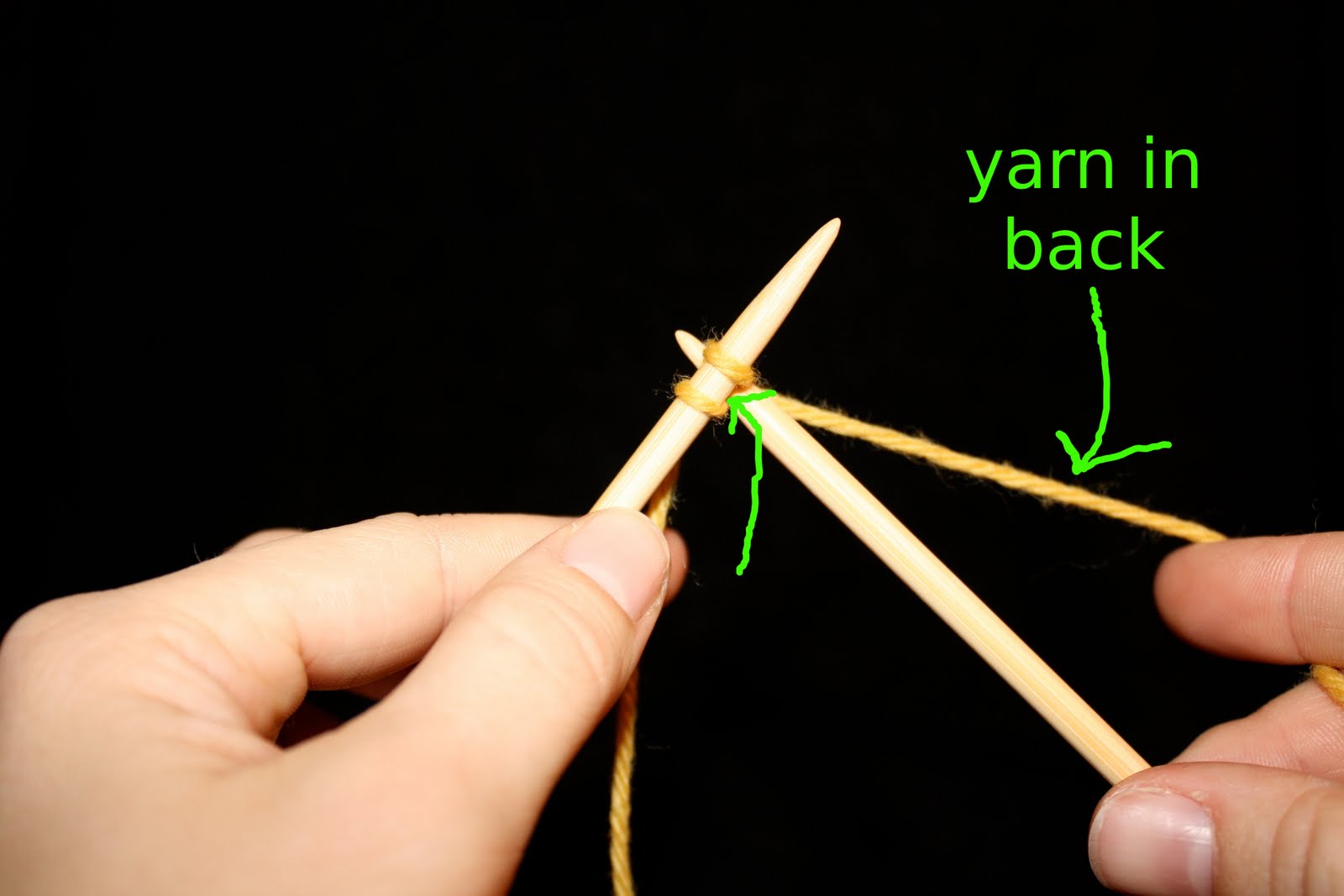
Step 2: Insert the tip of your right-hand (RH) needle (the one with no stitches yet) in between the two stitches from front to back. Hold the working yarn to the back.

Make sure to insert needle between the stitches, not through either of them. I've tried to illustrate this with the pathetic green arrow seen above.


Step 3: Working yarn is still in the back, right? Wrap the yarn counter-clockwise around the RH needle.


Step 4: Bring the tip of the RH needle down and back through the two stitches, pulling the wrapped yarn with it.


Step 5: Now you have a stitch on the RH needle. Slip it to the LH needle by inserting the tip of the LH needle through the underside of the loop on the RH needle. Slip it off of the RH needle.


Now you have a successful cable cast-on stitch.

Booyah!


Repeat steps 2 through 5 until you have cast-on as many stitches as you need.

It'll look something like this:


And something like this when it's done with k1p1 ribbing:


These were cast-on with a needle three times larger than that used for the ribbing. This is a very firm cast-on. I would always do it with a needle at least a size larger than the one you intend to you; it's easy to do it way too tight. I'm willing to bet it would still look nice using a needle up to 5 sizes larger than the working needle. I've heard tell of a 'ribbing cable cast-on', so I wanted to introduce the easy one and then contrast it to the ribbing one. One would think that the ribbing one would be better for ribbing (it is in the title), but I want to see for myself.